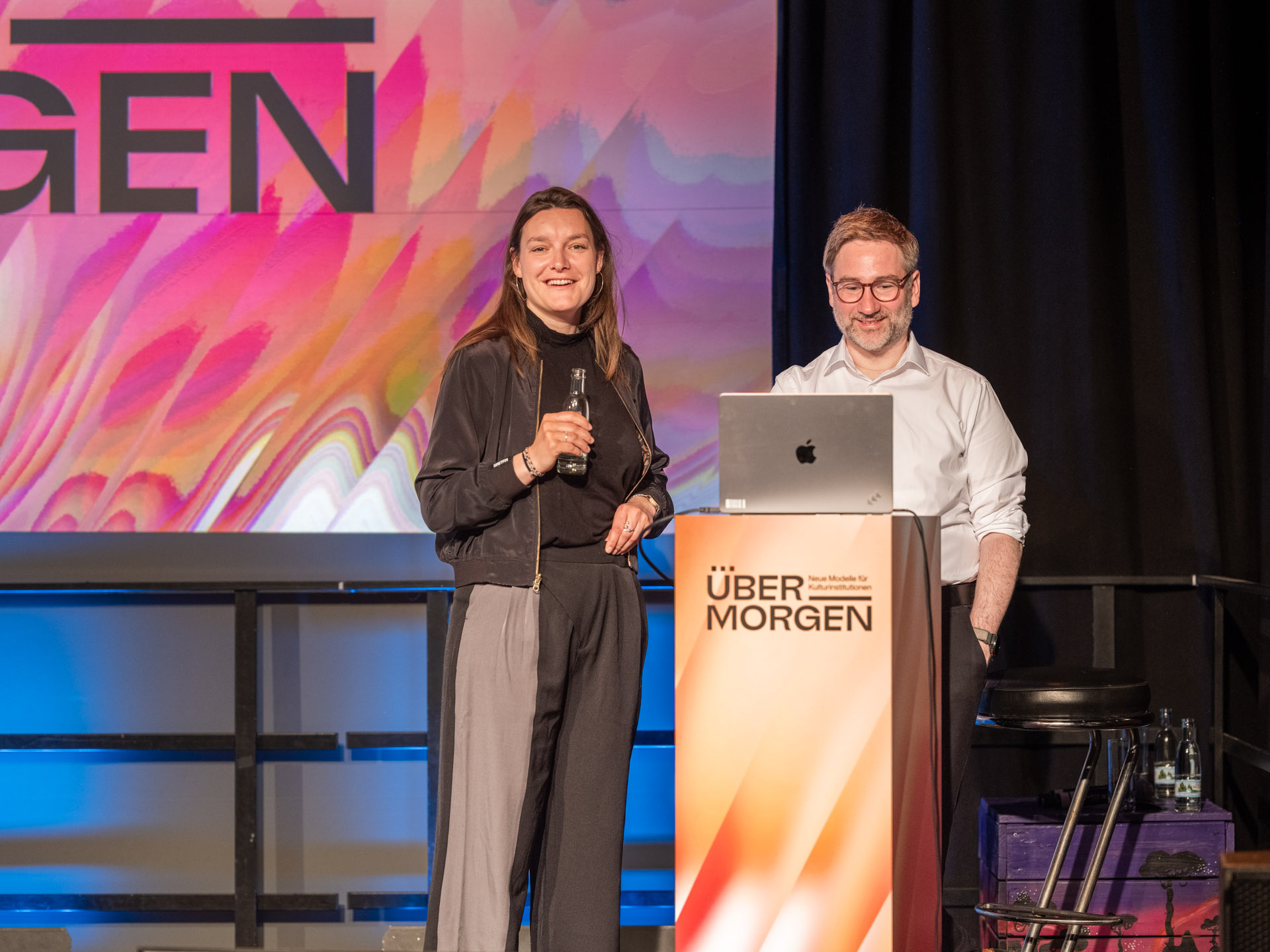
Video description

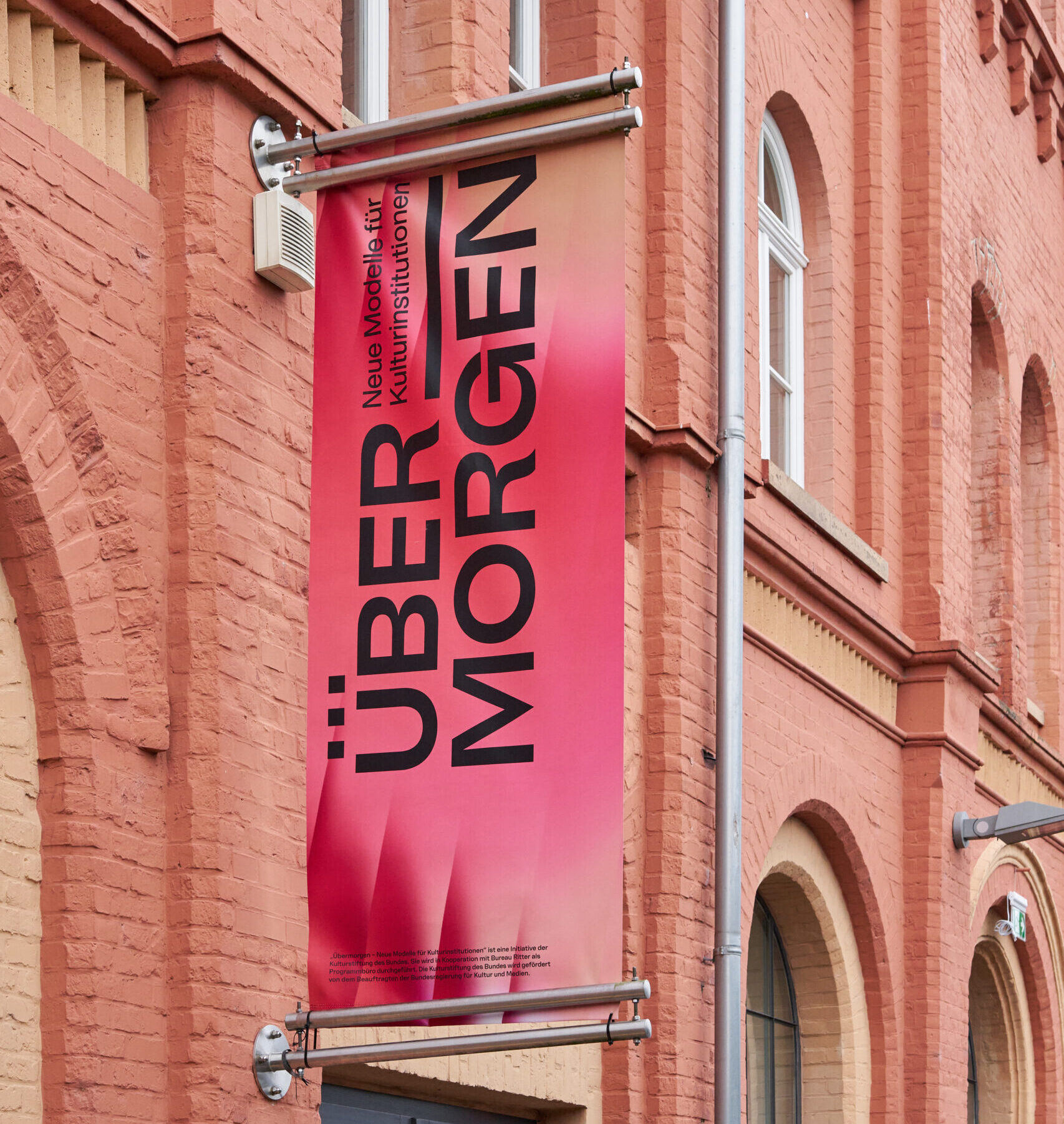
ÜBERMORGEN

New Models for Cultural Institutions

What will cultural organisations look like in the future?

Funding Program

  • 50 funded projects
  • 50 future visions
  • 2 years of development time

Future Forums

  • Expert advice
  • Exchange
  • Networking

Research trips

  • Research
  • Knowledge transfer
  • Change

New models for our cultural landscape –

ÜBERMORGEN starts now.

Video-Beschreibung

ÜBERMORGEN

Neue Modelle für Kulturinstitutionen

Wie sehen Kulturinstitutionen in Zukunft aus ?

Förderprogramm

  • 50 Geförderte
  • 50 Zukunftsvisionen
  • 2 Jahre Entwicklungszeit

Zukunftsforen

  • Beratung
  • Austausch
  • Vernetzung

Inspirationsreisen

  • Recherche
  • Wissenstransfer
  • Impulse

Neue Modelle für die Kulturlandschaft –

Übermorgen beginnt jetzt.

Cultural institutions of the future

„Übermorgen – New Models for Cultural Institutions” supports German cultural institutions — such as theatres, museums, libraries and socio-cultural centres — through fundamental structural change, strengthening their resilience and impact on society.


In spring 2025, fifty cultural institutions from across Germany embarked on this journey and are currently developing innovative ideas to help guide their organisations successfully into the future as relevant spaces for social life – particularly in light of the significant challenges and crises of our time.

During the orientation phase, running from May 2025 to December 2026, the German Federal Cultural Foundation – in cooperation with Bureau Ritter as the executive partner – is supporting each institution with funding of €50,000. Future Forums and international research trips also provide valuable inspiration for shaping these future-oriented projects. A total budget of up to €4.6 million is available for this first phase.

The implementation phase will begin in 2027, during which up to twenty pioneering projects will receive support to put their plans into practice. Applications may be submitted both by participants from the orientation phase and by institutions or consortia that have not previously been part of the programme. A total budget of up to €10 million has been allocated for this second phase, with the call for proposals opening in autumn 2026.

Programme News & Updates

Talks and inputs on institutional transformation and the impact of cultural organisations

What Can We Know Amid Change?

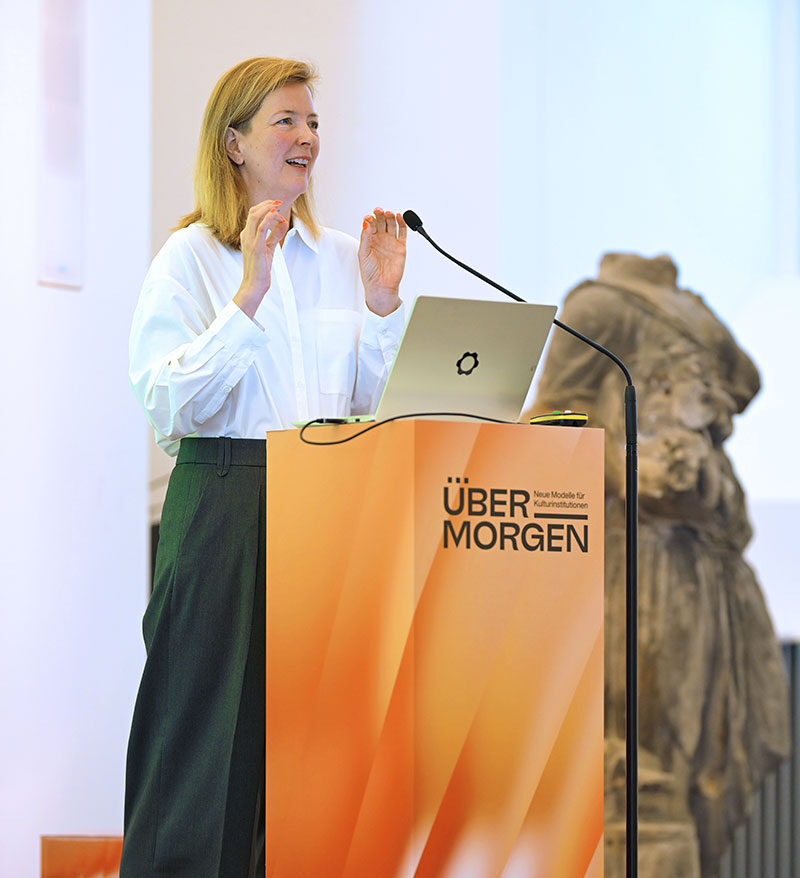
What is it possible to know when everything is in flux? How do organisations, teams, and leaders make a fresh start? And how can the impact of cultural organisations be articulated in a way that makes for a compelling argument in cultural policy? These are the questions we explored at our 4th Future Forum. The talks by Beat Fehlmann, Musikakademie Liechtenstein, and Marlene Troidl & Martin Zierold, Institute for Culture and Media Management at the Hamburg University of Music and Theatre, offer some answers.

More
Talks on Artistic Freedom and Political Interference (in English and German)

Cultural Institutions Between Freedom and Function

What should publicly funded art deliver for society? What does it need in order to do so? And where does its freedom lie? These questions are addressed in the keynotes by Christoph Möllers, Professor of Public Law and Legal Philosophy at Humboldt University Berlin, and Prof. Dr Teresa Koloma Beck, Professor of Sociology at Helmut Schmidt University Hamburg. A panel featuring voices from across Europe broadens the discussion with international perspectives.

More

Talks on Participation (in German)

Culture for and with Whom?

The opening up of institutions, the establishment of third places, and the desire for greater public involvement run like a common thread through many cultural organisations’ initiatives. But how can this be achieved in a sustainable way? The contributions from Esme Ward, Director of the Manchester Museum, and Nicole Ebber, Head of Governance & Movement Relations at Wikimedia Deutschland e. V., offer insights into the opportunities and challenges of participatory processes.

More

Ideas for networking, exchange and knowledge transfer (in German and English)

Embarking on the Future of Cultural Institutions

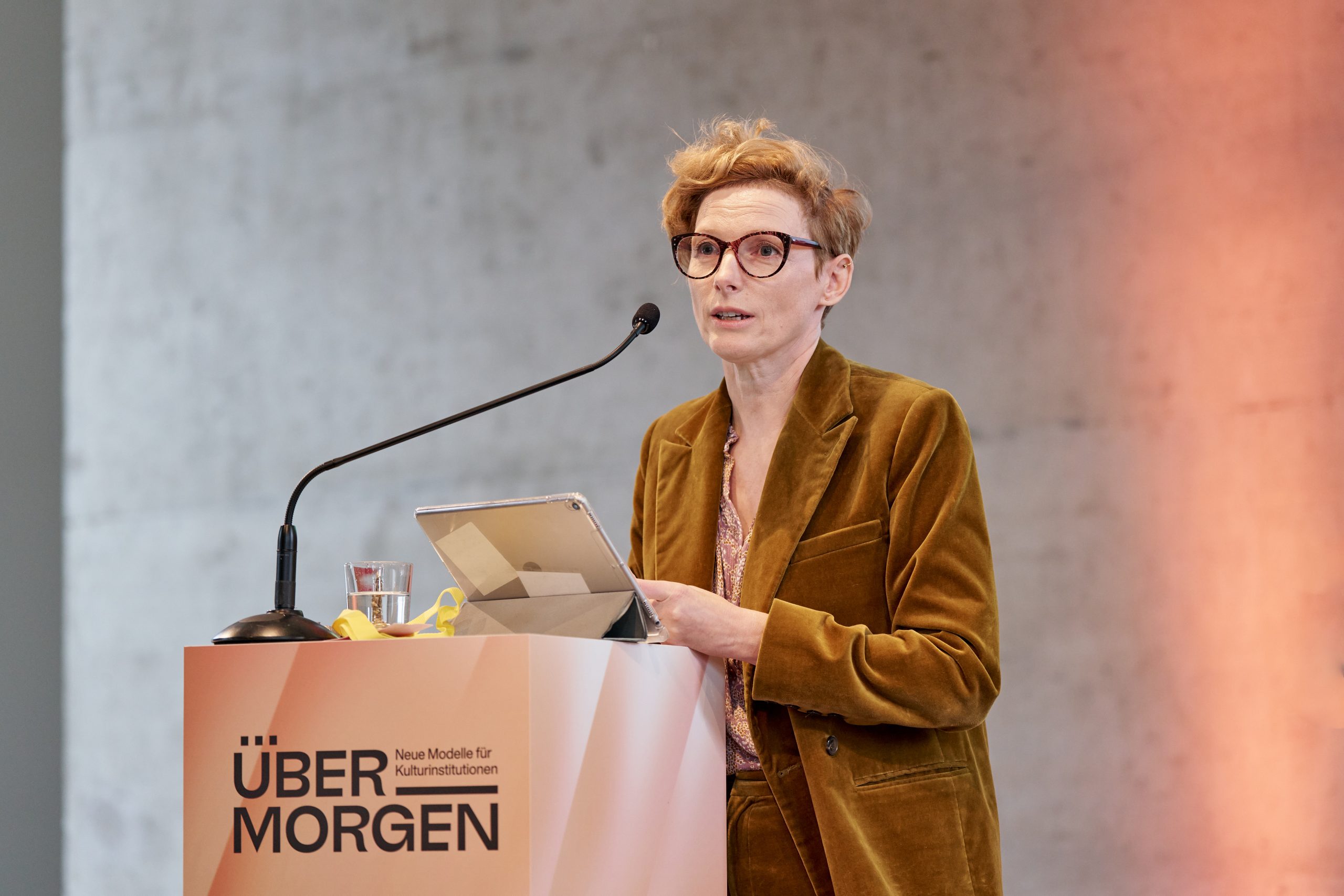
Übermorgen is dedicated to driving fundamental structural change and exploring new, forward-looking models for cultural institutions. At its core lies the question of how we can imagine possible futures, broaden our perspectives, and navigate complexity and uncertainty. Inspiration and insight come from keynote speeches by Caroline Paulick-Thiel (Politics for Tomorrow), Dirk Brockmann (Technische Universität Dresden), and Aric Chen, Director of the Zaha Hadid Foundation.

More

News from the Research Trips

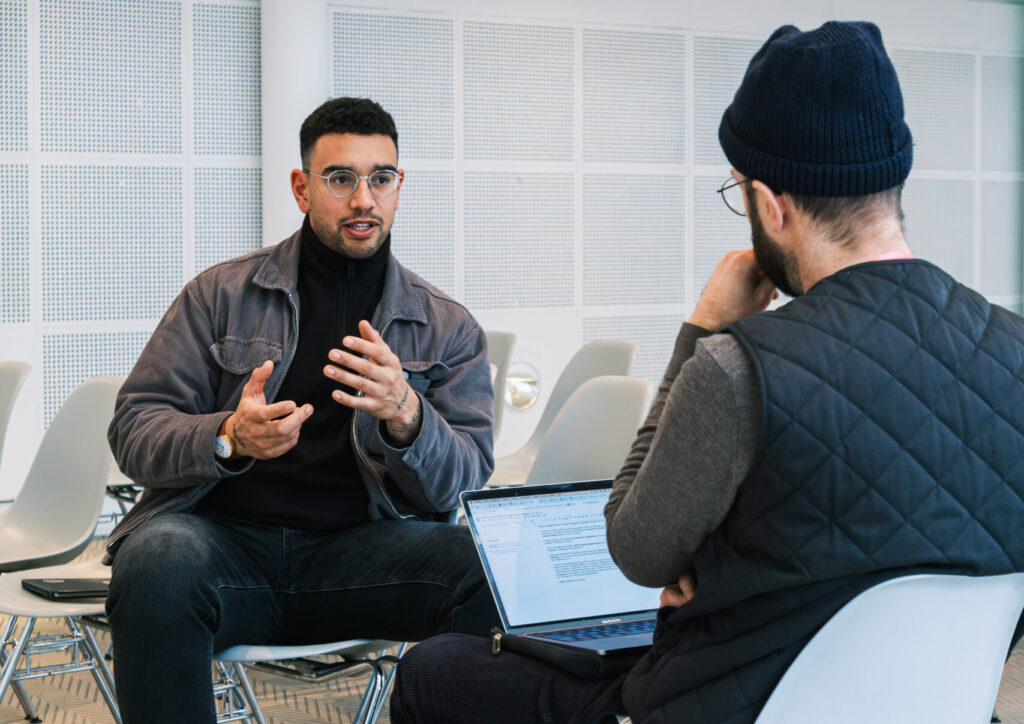
„Reframing what a museum can be in the 21st century.“ — that is the ambition Manchester Museum has set itself. But why? And how do they go about it? Cornelius Puschke sat down with Ciaron Wilkinson, Head of Partnerships and Engagement, during our first research trip and got some answers.

Learn more

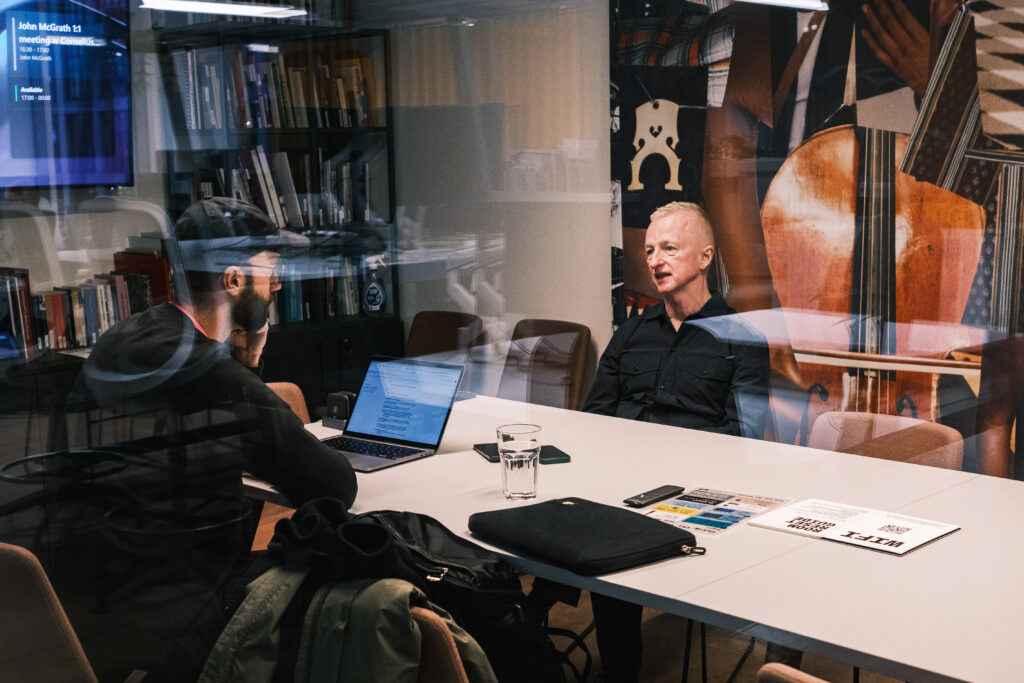
„Reopen our own expectations of the future.“ — that is the guiding principle of Factory International and its Artistic Director, John McGrath. In this interview, Cornelius Puschke explores what exactly that means, particularly in the context of day-to-day work.

Learn more

Perspectives from the Future Forums

Global Conflicts in Organisational Everyday Life: Between Vulnerabilities, (Anti-)Discrimination and Political Conflict

In her lecture, Teresa Koloma Beck, Professor of Sociology with a focus on social analysis and social change at Helmut Schmidt University / University of the Federal Armed Forces Hamburg, highlights how global political conflicts are increasingly shaping the everyday working lives of cultural and academic institutions.
Note: The video recording has been published in this form with the consent of Teresa Koloma Beck.

Learn more

Artistic Freedom and Institutions – The Concept of Artistic Freedom and Its Legal Limits

Art and cultural institutions are coming under increasing political and societal pressure — a point made clear by Christoph Möllers, Professor of Public Law and Legal Philosophy at Humboldt University of Berlin, in his online keynote. But how can they protect themselves and, ideally, even strengthen one another?

Learn more

Discover further insights on our Inspiration page.

The 50 funded projects of the first phase

Which institutions have been selected?

Learn more