„We are learning from people.“
In conversation with Monika Dylewska-Libera, Director, and Jakub Walczyk, Deputy Director at Gdański Archipelag Kultury (GAK)
The GAK was founded in 1967 as a municipal centre for culture and reopened in 2007 as the Gdański Archipelag Kultury.
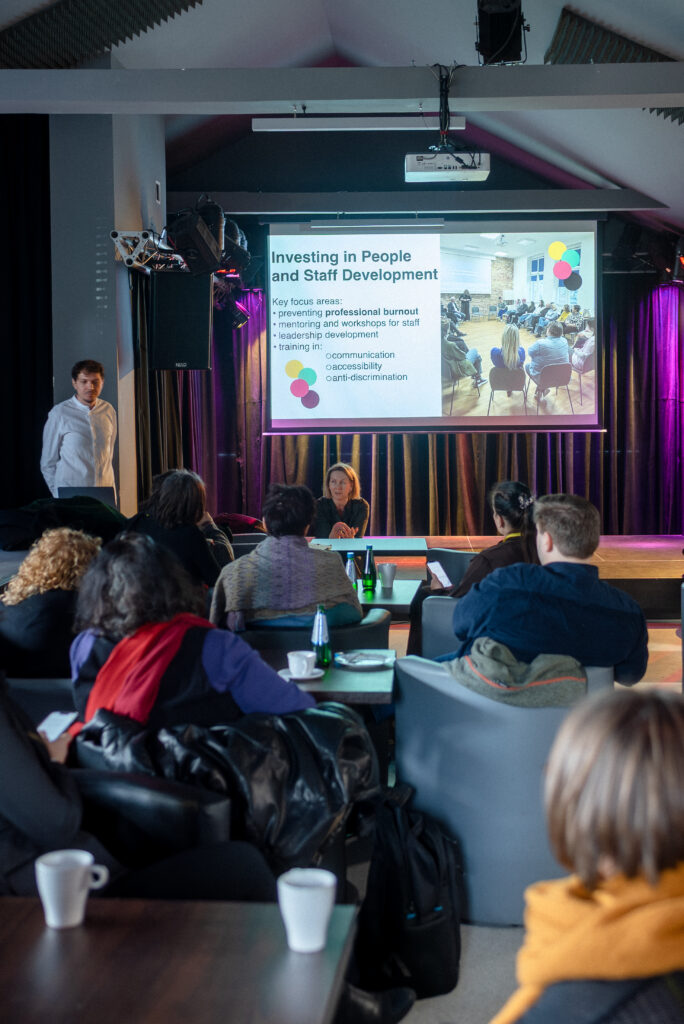
The Gdański Archipelag Kultury (GAK) spans eight sites across seven districts of the city — and its name already signals its ethos: not a single institution, but a constellation of smaller “islands”. What began in 1967 as a municipal cultural centre offering concerts, festivals, and large-scale events has, over the past four years, been undergoing a quiet but resolute transformation. Director Monika Dylewska-Libera and her deputy Jakub Walczyk are working to shift the GAK from an impresario-style institution into a genuine space for co-creation — one where the programme is not simply presented to audiences, but developed together with local communities.
On the margins of our visit, Cornelius Puschke spoke with Monika Dylewska-Libera, Director, and Jakub Walczyk, Deputy Director.
Cornelius Puschke (CP): Could you please tell me about the history of the GAK, its development and its current state?
Monika Dylewska-Libera (MDL): Our history starts in 1967. We were founded under the name City Centre of Culture, and in the 1990s the name was changed to Gdańsk Archipelago of Culture (Gdański Archipelag Kultury) — a very poetic name. Our institution consists of eight branches in seven districts of Gdańsk.
CP: So when you say “archipelago”, what does that concretely mean? What stands behind it?
MDL: We have eight buildings that stand in a specific relation to one another. “Archipelago” describes the cooperation between these houses.
CP: Like islands that are somehow connected.
MDL: Yes, but we use the abbreviation GAK because we are one institution — we have one team and do not feel separated like islands.
„We want to use our resources to support local artists and engage with communities.“
CP: So that was the situation in the 1960s, but the institution also changed in response to the development of the city, through political developments and so on. How did that unfold?
MDL: Yes, we changed, but only a little. Arts education was always here and present, the whole artistic field encompassing music and dance. The main purpose of the institution was to bring all of this together. So we are a gallery, a community centre, an education centre and a concert hall. We have every branch of the cultural industry incorporated into one organisation. We have a long history of staging large events, big concerts and major music festivals. Now we are shifting our practice more towards the communities of the city — working with people from the local neighbourhoods.
Jakub Walczyk (JW): We have actually transformed from an “impresario institution” that presents large concert spectacles and a great many open events into an institution that engages with local communities. We involve the neighbourhoods in cooperating with us — not merely to passively experience a curated programme, but to co-create it with us, to gain agency and to be together. But as Monika said, it is not really a change so much as a transformation, because we are adding our community work to the existing impresario model.
MDL: And we are changing the proportions.
JW: Yes, we are not only bringing big television celebrities to our venues but trying to do things in a more experimental way. We want to use our resources to support local artists and engage with communities.
CP: So it was a strategic shift from presentation to participation. But why did you make that decision?
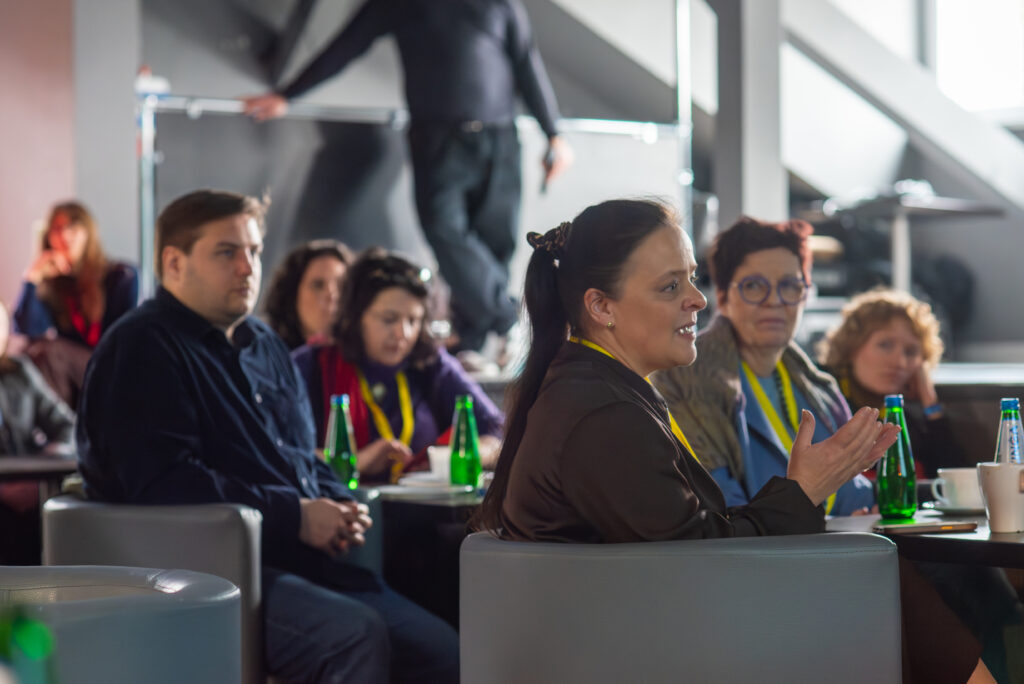
MDL: To participate in high-level culture — opera, for example — you need to be prepared for it. In Poland, arts education in schools does not prepare people to understand modern art. So this kind of education is important work; it is a process. And we want to commit to long-term processes, not only quick events such as concerts. This is the main change we want to develop within this institution.
„Our goal is to open the museum to different people — for example by involving people with disabilities in our practice.“
JW: This also connects to our own professional backgrounds: Monika was Head of the Educational Department at the National Museum, and I worked as Head of the Public Programme Department at Centrum Kultury ZA-MEK in Poznań. Our goal is to open the museum to different people — for example by involving people with disabilities in our practice.
CP: Participation in your daily practice is very much related to education. Not in the sense that you tell other people what they have to participate in, but rather engaging with people and listening to them.
JW: Yes.
CP: And does this feed back into your institutional practice?
MDL: Yes. We encourage people with all kinds of educational backgrounds to come to us and, for example, talk on the most accessible level with the philharmonic orchestra.
JW: Yes, and recent research shows that when people are compelled during school to attend, for example, a philharmonic concert, they will not understand it and will not return to such institutions. We encourage people by telling them it is perfectly fine not to know something — they can still participate without any specific prior knowledge. But we have to listen to them; that is absolutely essential.
CP: When I listen to the way you describe the classical understanding of learning and education, I would say it represents a vertical understanding of knowledge. And you mentioned earlier that you describe the GAK as a platform that stands for a horizontal understanding of knowledge. Who learns from whom, and how?
MDL: We are learning from people.
CP: And what kinds of knowledge actually come into your practice?
JW: The first step is always to make people feel comfortable with us and to help them understand that they will not be judged. We want to create a safer space where people can feel free without the fear of being insulted. Our starting point is respect for human rights. And we always try to prepare our educational materials in two registers: one is standard language, the other is plain, easy-to-read language.
„For rather hermetic groups, we use a strategy of self-advocacy by giving responsibility for events to people who hold the particular knowledge that is important for the event.“
CP: Theoretically speaking, I entirely understand your way of working and how you do it. But I imagine the crucial moment is how you bring ideas and plans to the people. How well connected are you to the neighbourhoods? And why are they actually interested in you? How does this work in practice on, say, a Tuesday morning?
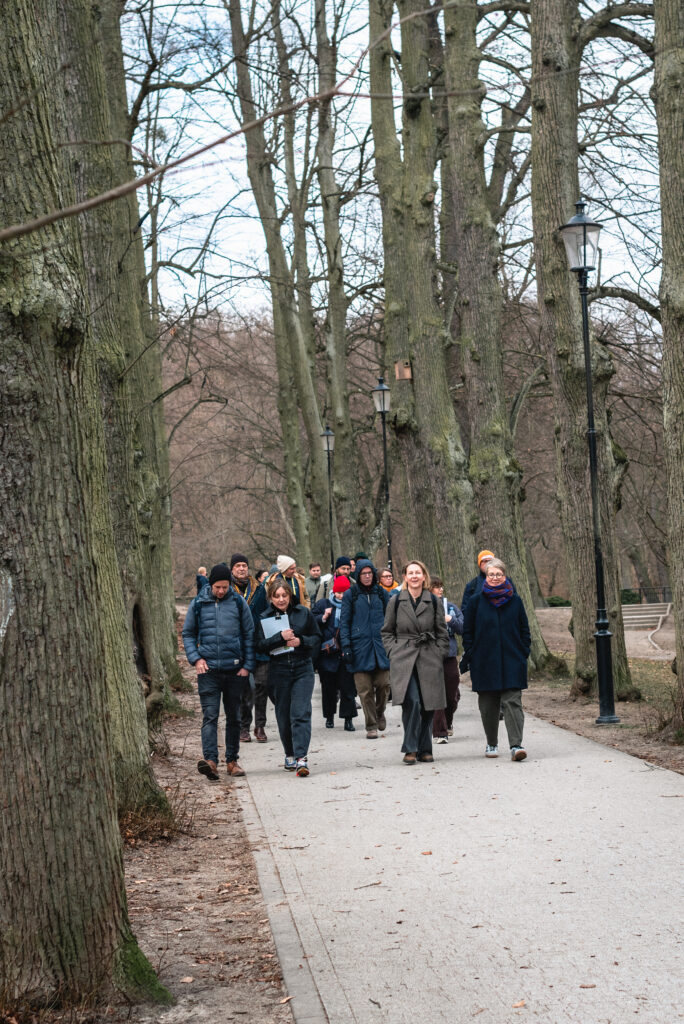
MDL: We are out in the field a great deal. We know the neighbourhoods; we know the local leaders. We also work extensively with people’s memories, recalling what happened here in the 1980s, and we meet with them regularly. Through this, people have come to trust us. We are available to the citizens of Gdańsk, and they feel it.
JW: For rather hermetic groups, we use a strategy of self-advocacy by giving responsibility for events to people who hold the particular knowledge that is important for the event. For example, when we engage with Deaf people, we run a sign-language film club where films are translated from spoken language into Polish Sign Language. For this, we do not invite a film expert from the university — we invite a Deaf film expert, and she runs the discussion in sign language after the screening. It is important that she can use her first language to conduct the meeting, and we interpret from sign language into spoken Polish so that people like me, who do not understand sign language, can also participate in the conversation and interact with the Deaf participants. And even when we do not have an interpreter, we can still communicate by text and find ways to connect.
MDL: And through this shift in our practice, Deaf people have also begun to attend other events in our programme — something they had never done before. We can connect with one another even without an interpreter.
CP: So you are not only reaching out to people on a project basis — approaching them according to your specific needs and then parting ways — but also involving them at the level of decision-making and curation. They can genuinely use your resources and framework to develop their own agenda.
JW: We are learning how to do that. It is a process.
MDL: Because sometimes people outside the institution do not understand what a public institution is. Some of them think that because something is public, it belongs to them exclusively. But to ensure that our resources are used equitably, we need management that respects the needs of many different people. We invest a great deal of effort in making these processes transparent.
„Violating human rights is our limitation.“
CP: How would you describe the level of openness you have at the moment? And secondly, how far can you actually open up? Are there also certain limitations?
MDL: Violating human rights is our limitation. Extremists are not welcome here. We do not support any political factions. We want this openness, but of course we have boundaries.
JW: Sometimes we also have to hold back, because the public may want another concert whilst we know our team is exhausted and needs to rest. They cannot work around the clock. On the other hand, it is also wonderful that people want more from us — more concerts, more events, more of everything. But still, we need to sleep.
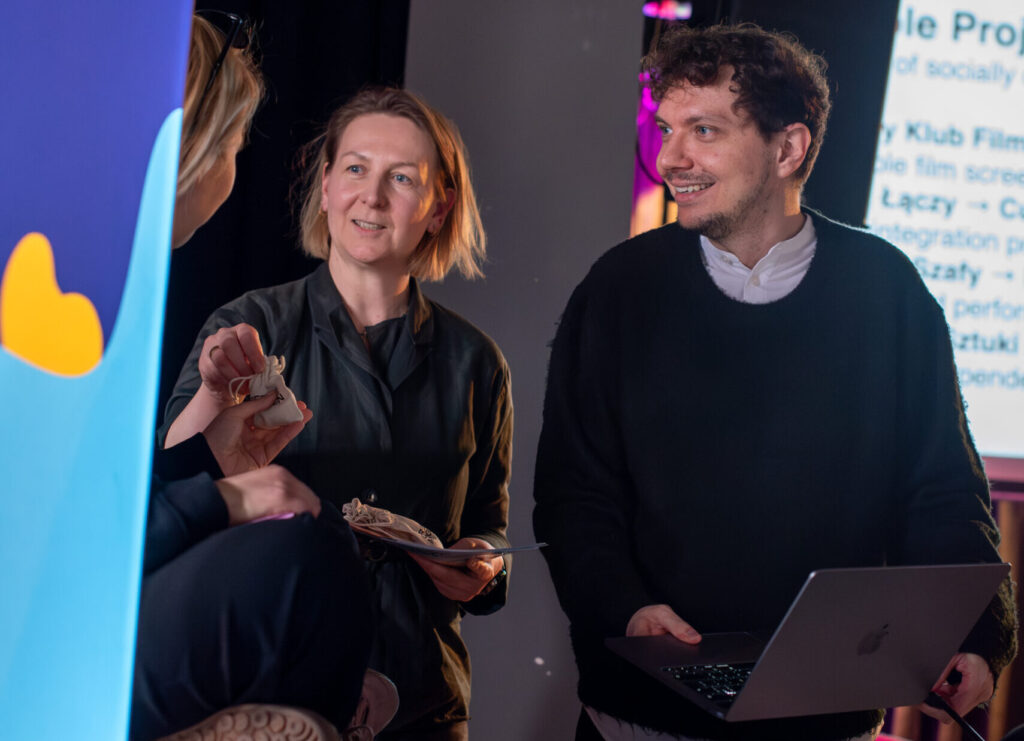
CP: But when you are in a situation where citizens, communities and people articulate their wishes and expectations — and they want you to do more — that is a truly beautiful sign, because it shows that your work is relevant to them. They value it and they want more of it.
JW: It is genuinely wonderful that people want more. But for us, being in the front row, it is a real challenge.
CP: Interesting. So as soon as you reach this moment of relevance — the shift from presentation to participation — and arrive at the point where people genuinely feel involved and sense that they can really make something happen here, you need to develop criteria and make transparent what your limitations are and what you can provide.
MDL: Yes. Being candid about limitations is very important.
CP: Of course — to prevent workloads from exceeding capacity, to prevent burnout, and to maintain a healthy working environment. I wish you all the best with that. I would love to come back in five or ten years and see how your work has unfolded. Thank you very much.
Hard Facts
Gdański Archipelag Kultury (GAK)
Year founded: 1967 / reconstituted as Gdańsk Archipelago of Culture in 2007
Number of employees: 70
Annual budget (fixed budget, third-party funding, donations/private funds): 3,3 Million
Legal form: Public institution
Organogram: Programmatic, Financial, Organisational and Operational pillars
Number of events per year: 700
Number of visitors per year: 230,000
Type of events: Large-scale events including concerts, performances and open-air events, as well as participatory and animation-based activities rooted in audience development and community arts.