“It was not to be a merger by takeover.“
In conversation with Francesca Poloniato, Director, and Céline Rousseau, Deputy Director of LE ZEF
LE ZEF – scène nationale de Marseille for contemporary arts, theatre, dance and music came into being in 2019 through the merger of the Théâtre du Merlan and La Gare Franche.
LE ZEF – scène nationale de Marseille came into being through the merger of two very different venues: the Théâtre du Merlan, a Scène Nationale, and La Gare Franche, a house and studio surrounded by gardens which, after the death of its founder, the artist Wladyslaw Znorko, was left without long-term planning security. At the suggestion of the regional cultural authority (DRAC), a process began that lasted two years, was accompanied by an external consultant and, step by step, in-volved the whole team, the associated artists and finally the authorities as well. Director Francesca Poloniato and her deputy Céline Rousseau explain why the merger could not be a takeover and what it takes for two teams to become one that looks into the distance together
As part of our visit, Cornelius Puschke spoke with Francesca Poloniato, Director, and Céline Rousseau, Deputy Director, at LE ZEF.
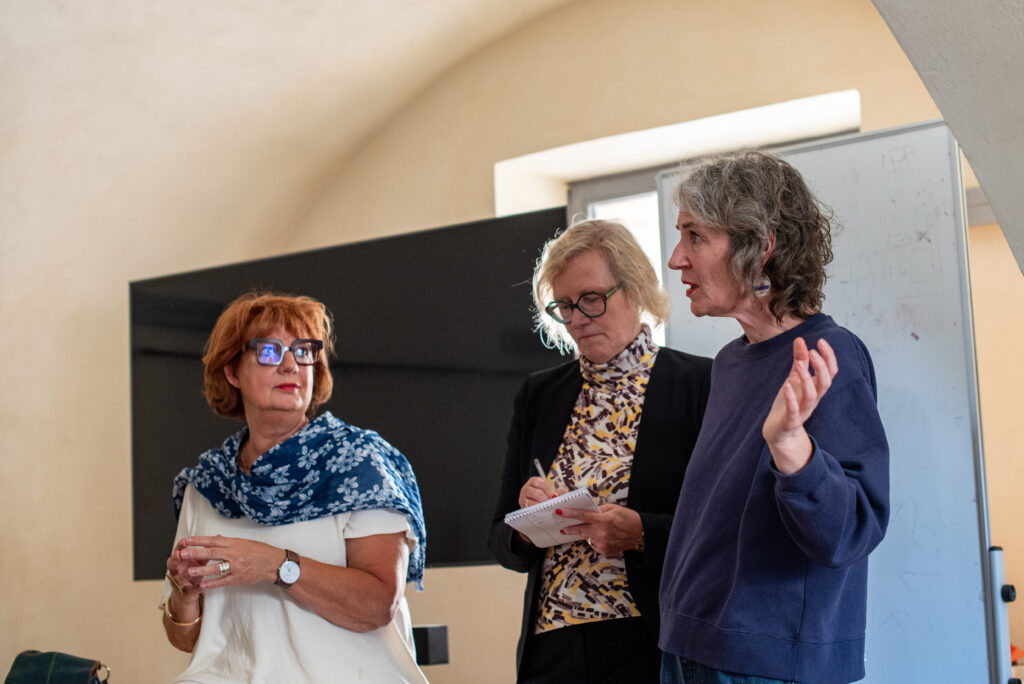
Cornelius Puschke (CP): My first question is a personal one: how did you meet?
Francesca Poloniato (FP): When I came to Marseille to apply for the directorship of the Théâtre du Merlan, I visited various venues, including the Gare Franche twice. The first time I went there was in the late afternoon. As it was already quite dark, I didn’t get to see everything. The next morning I went back and met Céline and her colleagues from the Gare Franche. I thought the place was lovely, with a wonderful atmosphere and a team of women who were protecting it and trying to preserve it despite the death of the artist who had been based there for a long time.
Céline Rousseau (CR): And we went on to carry out a few projects together before the merger between the Théâtre du Merlan and the Gare Franche took place.
CP: So you had already developed and established a working relationship before the merger of your two organisations became a topic of discussion.
FP: Yes, but it was a brief, professional relationship.
CP: Could you each describe your respective institutions independently, before you began working more closely together?
FP: As far as the Merlan is concerned, for me it was first and foremost a Scène Nationale, a national theatre, with a venue situated in a special location, in a neighbourhood that is equally exceptional. And I very quickly took a liking to this theatre, with its stage and the tiers of seating that create a wonderful relationship between the stage and the auditorium. You really feel very close to the artists on stage. I found a team that was very keen to take on a new challenge. So for me, this theatre isn’t a beautiful theatre in the classical sense; it’s rather ugly, in an ugly location, but I found it beautiful and wanted to enhance it through my work. I’ve now been working at the Merlan for ten years. It’s loved by the team and by the local residents too.
CR: And La Franche is a house and a studio, surrounded by gardens. It is a place that grew out of the vision of an artist who, at a certain point in his life, felt the desire to settle down. It has evolved from the relationship between the artist and his surroundings and is a place of artistic creation, a workspace, much like a studio. It is not designed to stage performances, but is intended for work. This is really about the idea of a workplace and the time artists spend there. Precisely because we do not stage performances, one of the key themes of the Gare Franche is the question of how the artistic creative process is shared with local residents – how artists engage in an exchange with the local community.
“Politicians made it very clear to us quickly that they considered this place important and wanted to preserve it, but that there was no long-term planning security.”
CP: So you knew each other, you’d had a brief working relationship. There were the two venues with their histories, practices, roles and goals – in all their differences. And then there was a moment, a situation that was new, and change became necessary. What happened?
CR: Yes, the situation changed when the artist who founded this place, Wladyslaw Znorko, passed away. From that moment on, the team running the venue wanted to preserve the artistic spirit of the place without simply replacing Vlad. That was the starting point. A new system then emerged – a new project centred on the artists. But this project was rather fragile, particularly in terms of support from local authorities and the state. Politicians made it very clear to us quickly that they considered this place important and wanted to preserve it, but that there was no long-term planning security. Ten kilometres away from us, Francesca had just been appointed director of the Théâtre du Merlan, with a concept that was very much focused on the urban environment. We had started meeting and getting to know each other, and wanted to take things a step further together during this challenging phase for us. We sensed that there was a strong complementarity in what we were doing in relation to urban society, and so we began to work together with a new perspective and to draw closer through this complementarity.
CP: What was it like for the Théâtre du Merlan? Did you also face a crisis, a challenge, a need for change?
FP: When I arrived, it was a very difficult time for the team, which had just come through a turbulent end to the previous direction. There was a neighbourhood in turmoil, high expectations towards the new management, a team that was in a very fragile state, and on top of that the authorities saying: ‘It has to work out with her, otherwise you’ll lose the title of “Scène Nationale”. There was a sword of Damocles hanging over us. The concept I’d put forward in my application for the role of director was very open to the different neighbourhoods and involved a completely different understanding of leadership, which meant I was able to bring the team together quickly. There was immediately a lot of support for this within the team and we got down to work. There were no further disagreements after that – I felt very much at home there and the team worked well together. We received initial feedback from the neighbourhoods and the politicians were reassured. I knew that the funding would follow as our project took shape. So at that point I wasn’t in a particularly desperate situation – I already had plenty to do.
“It was not to be a merger by takeover; that was out of the question.“
CP: So you had two completely different types of crisis to manage within your organisations. Against this backdrop, how did the merger of your organisations come about, and what was its impact?
FP: We had already overcome the crisis and were fully immersed in our new project. I joined in 2015, and the crisis subsided quite quickly over the course of 2016 and 2017. We were already making good progress with the Merlan team, independently of the Gare Franche. However, I recognised the potential for our two organisations to enrich and complement one another. The DRAC (Regional Directorate for Cultural Affairs) put forward the merger proposal so that the Gare Franche could better establish itself, consolidate its position and continue its work, just as the Merlan could. The arguments put to me were that my artistic concept could be linked to an artists’ initiative and that it was important to be able to work across a large area and to have a venue that could facilitate artist residencies. I had to speak to the Merlan team. They had to agree to the merger. Without them, it wouldn’t have been possible.
“Give me time so that we can develop a new concept that makes sense, otherwise it won’t work. And they gave us the time.“
CP: How did you structure your collaboration from that point onwards? Did the two of you sit down together and sort it all out? Or were there other external people who supported and advised you?
FP: It has never been just the two of us. A colleague of Céline’s was always present. I must admit, I was very anxious at first. From the outset, I considered it essential to be supported by an external consultant throughout the process. It was not to be a merger by takeover; that was out of the question. I then asked to be allowed to choose the consultant who would work with us. We chose a woman called Hélène Cancel, who worked with us for over two years. That was a very long time, but that’s what I demanded from the authorities: give me time so that we can develop a new concept that makes sense, otherwise it won’t work. And they gave us the time. Sometimes we worked with the whole team. The associated artists were also involved at certain stages in this merger process.
I had the opportunity to meet with the advisor once a month in an office in Paris. It felt as though I were seeing my psychologist. It was really about how I was experiencing this situation and how I could take a step back to come to terms with a place that was actually a kind of residential building with rooms and a kitchen. There were communal gardens, and there were chickens, which I have a phobic fear of. It was a completely different environment to the Merlan. That’s why I needed the advisor. She came along every two months to work with the teams and speak to their members individually. In this way, she taught us how to work together as a team. Very quickly in this process, I realised how Celine’s role was taking shape within the organisational structure.
“It is a process that was not imposed structurally, but rather gave rise to a shared corporate culture that was already characterised by laughter and joy even before the merger.“
CR: In this process, it was very important that we worked in groups. And these groups of people involved gradually grew larger, until eventually the whole team, the artists and even the authorities were included in our working process. And what was particularly impressive: when the merger was then implemented structurally, there was already a very strong shared organisational culture, an incredible joy in being together and lots of laughter. It is a process that was not imposed structurally, but rather gave rise to a shared corporate culture that was already characterised by laughter and joy even before the merger.
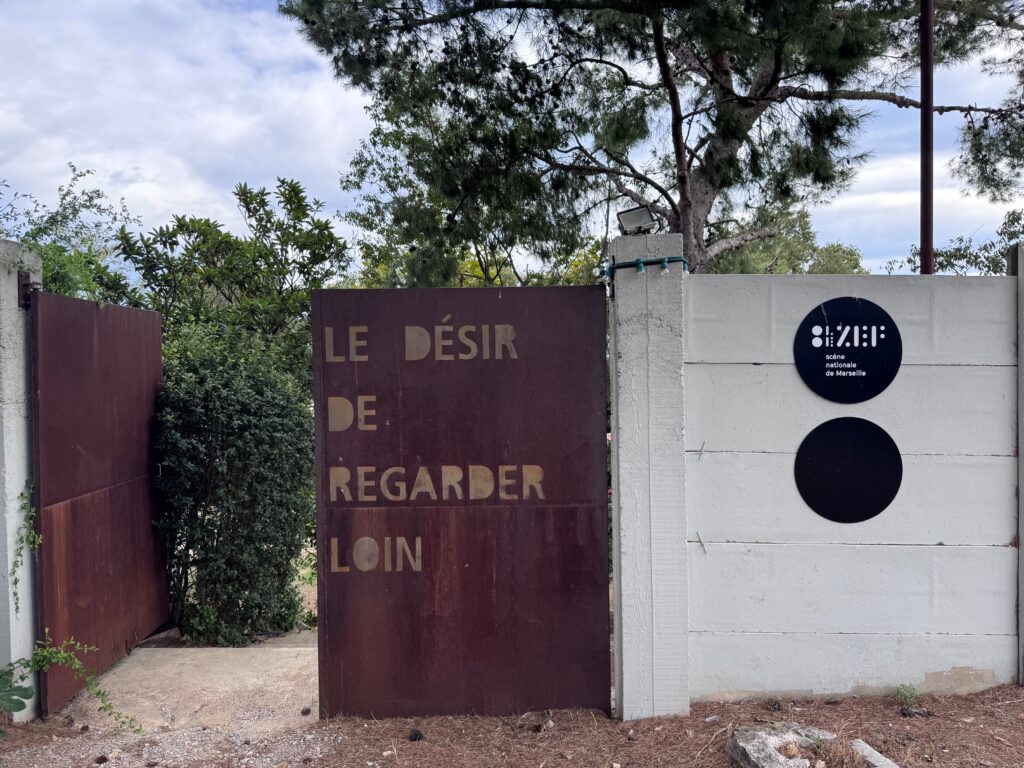
FP: And just as the merger became a reality, I invited an Italian artist and asked her to explore the merger and the two parts of the city. She created a piece entitled ‘The Desire to Look Further’.
CP: That’s a wonderful way to conclude. Thank you both for sharing your insights into this special process. I wish you all the best for the future.
Hard Facts
LE ZEF – scène nationale de Marseille
Year founded:
– 1978: Establishment of the Centre culturel du Merlan association.
– 1993: Awarded the “Scène nationale” label.
– 2019: Merger of Théâtre du Merlan and Gare Franche → Creation of ZEF.
Number of employees: 26
Annual budget (fixed budget, third-party funding, donations/private funds): 3,3 M€
Legal Form: Association
Number of events per year: 100 performances, 20 film screenings, 900h of workshop, etc.
Number of visitors per year: 20 000
Type of events (theatre performances, exhibitions, concerts, readings, discussions): Multidisciplinary performances (theatre, dance, circus and music), exhibitions, cinéma, workshop, etc.