„Reopen our own expectations of the future.“
An Interview with John McGrath, Artistic Director of Factory International
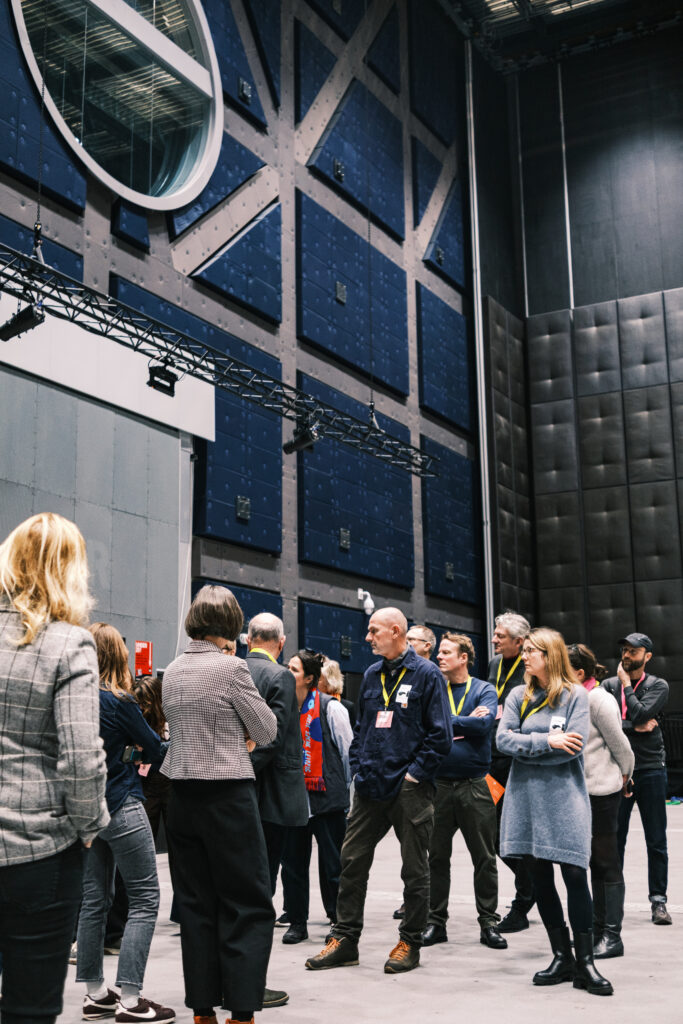
The Manchester International Festival (MIF) has been a fixture on the international festival calendar for decades – not least thanks to its Artistic Director, John McGrath. The festival’s success, combined with a major cultural policy strategy for the North of England under the banner of “Access and Excellence,” gave rise to something truly unique: Factory International. In 2023, the cultural institution opened with a spectacular new building, the Aviva Studios, in the heart of Manchester. Factory International serves as an international hub for outstanding artistic productions and a local engine for a vibrant and thriving cultural scene, structurally supporting it through extensive community projects and its own emerging talent academy.
On the sidelines of our visit, Cornelius Puschke spoke with John McGrath for an interview, asking how this ambitious vision became a reality.
Cornelius Puschke (CP): Please could you describe what Factory International is like as an organisation in your own words?
John McGrath (JM): Factory International is an arts and creative organisation that produces a wide range of new work while also supporting and developing communities in Manchester around creativity, skills for employment and opportunities for debate, discussion and meeting.
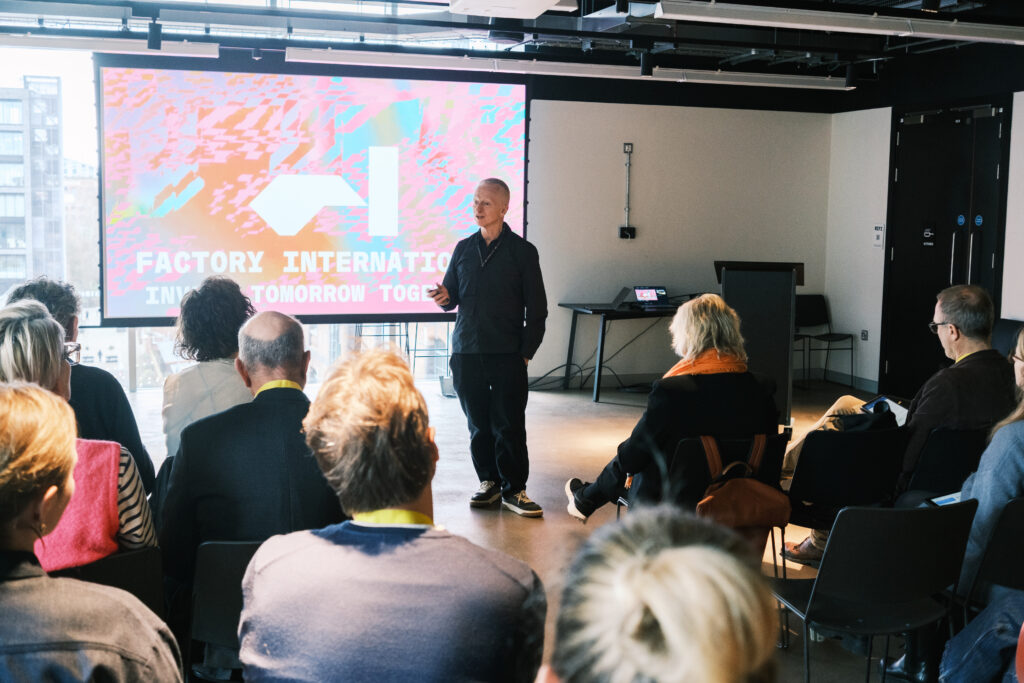
„Our mission is to invent tomorrow together, by developing extraordinary new and bold creations and inventions that think differently about the world.“
CP: And what’s the history and tradition of Factory International? How did it become what it is now?
JM: We were founded as Manchester International Festival in 2005 with the first festival taking place in 2007. The concept of the festival is to produce entirely new creations inviting artists from around the world to come to Manchester. Since the very early days that work’s been made in international partnership with other festivals and venues around the world. The festival became known for the ambition to produce works extraordinary in its scale and also for going beyond the distinction between high art and popular art. In recent years there’s also been a strong push to make sure that the works really connect with communities in Manchester.
In 2015 we were invited to work with Manchester City Council to develop the idea for a new venue in Manchester which opened in 2023. The venue is now called Aviva Studios. As part of developing the venue we realised that we could no longer simply be called Manchester International Festival because we were doing a lot more than that. So we created a new organisation called Factory International that pays tribute to the famous music label Factory Records that defined much of the cultural identity of the city. Factory International now runs Manchester International Festival, Aviva Studios, the Factory Academy and a wide range of community programmes, our online digital offer and our international touring programme. It’s all focused on imagining the future. Our mission is to invent tomorrow together, by developing extraordinary new and bold creations and inventions that think differently about the world.
CP: Let me go back to 2015 because it sounds like there was a certain momentum at the time. Manchester City Council approached the festival with the idea of building a new venue. So how did it come to this and why did they approach you?
JM: Manchester City Council has always had a very ambitious approach to culture and this approach was part of a long-term investment in culture and in arts activity as something that could help grow the city, improve the standard of life for the citizens and increase the international reputation of Manchester. The festival was part of that. In 2015 the National Government announced that it wanted to invest in new infrastructure in the north of England because historically investments in UK have been imbalanced over the past 50 plus years between the south and the north. So, the city council grabbed this opportunity and suggested a series of infrastructure projects including what had been achieved with the festival once every two years and turn that into a year-round offer.
„There was a significant amount of money on the table from the National Government […]. The city council was ready to supplement the money that national government was providing. And that was all part of how they were looking at development in the city.“
CP: And when this happened in 2015, was it already clear that the collaboration with sponsors and partners from the private sector was about to happen?
JM: There was a significant amount of money on the table from the National Government, not only to build the venue but also to support the running costs of it. The city council was ready to supplement the money that national government was providing. And that was all part of how they were looking at development in the city and trying to create more economic activity in the city center. But costs went up, we had Covid, we had the economic impacts of the war in Ukraine, so there was still a budget gap. The City Council decided to apply a fundraising approach that’s usually used with sports and music, which is offering the naming rights for buildings. So they developed a campaign with our support with an opportunity for a corporation to put its name on the building and provide an additional amount of money into the building costs. That was a new investment approach in the arts and not without some controversy around it with people who feel that’s bringing art and business into too close a relationship. The city council did a good process with potential partners of looking at how they behaved, what their values were and whether or not they felt it was an appropriate fit. In the end it became Aviva which is an insurance and pensions company, to put their name on the building. And they supported through the last stages of the building and actually continue to support.
CP: I would like to ask about your personal role in this process, because you were the festival’s artistic director in 2015. How did you respond to the council’s approach? How did you develop these big plans?
JM: It happened at a really interesting juncture. The very first approach and the idea of this government money happened before I was appointed, with my predecessor Alex Poots. When I was appointed to the job, the building was already something that the city and the festival were hoping to do and the site had been identified but there were no architects and only the first part of the government money was in place. The revenue money for the running costs wasn’t yet in place and there was a question about what the relationship of the festival to the building would be. So it could simply have been that the festival advised on the building and then had an office here, but there was a separate organisation to run the building. Or at the other end, closer to where we ended up, that the festival would become the organisation to run the building. We also had to find architects who would meet the vision for the kind of flexibility that we wanted. So what had to be determined was how we did it both in terms of the physical design of the building but also the structure and what role we would take in that. I spent a lot of time working on this.
CP: What does a typical Monday morning in the life of John McGrath look like and how does the day unfold?
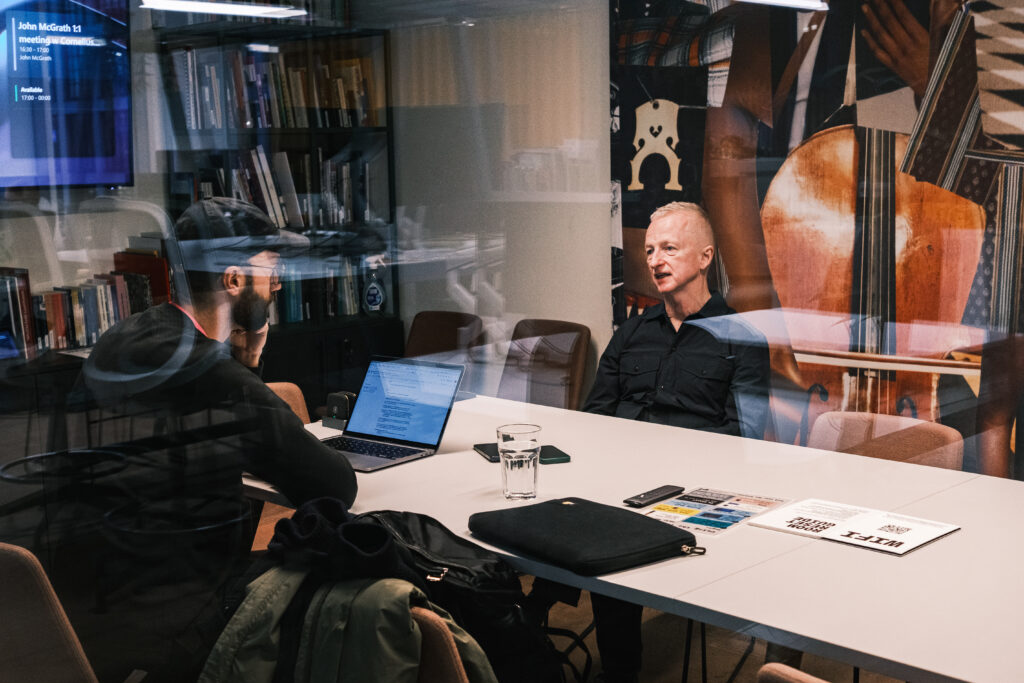
JM: I mean, interestingly, Monday morning is our curatorial meeting, so that’s our meeting where we sit down and look at all the ideas for the future. I think we put that on a Monday morning deliberately because it’s a really hopeful and exciting way to start the week.
CP: When does your working day start?
JM: If possible, it doesn’t start before 10am. I don’t like early starts. In that sense I’m a classic theatre person but I’m the Chief Executive as well as Artistic Director, so there’s a bunch of budget and strategy meetings. I love strategy, budgets not so much. I try to make my time overall around about 50-50 between things where I’m dealing directly with the art and round about 50% of the time thinking about the development of the company and the strategy of the organisation.
„[The ‚ideas breakfast‘] is one of the ways in which we open the organisation up and break down any sort of barriers and hierarchies.“
CP: Strategic planning plays an important role in your work, and I guess this skill is also part of your personality. I learned that you have one special meeting in your monthly planning that also feeds into your strategic agenda and is called “the ideas breakfast”. Could you tell me a little bit more about that?
JM: Yes, that’s one of the ways in which we open the organisation up and break down any sort of barriers and hierarchies. It’s a breakfast meeting at nine o’clock in the morning once a month on a Wednesday, where anybody who works for the organisation as a staff member or a freelancer can come, get some free breakfast and talk about art that they’ve seen and ideas for things that could happen in the building or could happen in the festival. Sometimes we ask a particular question like “What do we want to do about dance?” Sometimes we just have an open discussion of all the artists that people have seen and the ideas that they’ve got and then lots of ideas come from that into the curatorial meeting where we can decide to progress them. Lots of our staff are artists as well. We have porters who are musicians, we have managers who are writers, we have all sorts of artists on the team. So it’s also an opportunity for them to tap into that side.
CP: It’s a beautiful idea that relates very much to the present moment for the organisation and its staff – a regular moment of participation, of togetherness. And we are not only talking about the present, but also about the future: Your mission is to “Invent Tomorrow Together”, which resonates with the conceptual approach of “Übermorgen”, because it deals with the imagination and seeks ways of building a good future. What kind of understanding of the future do you use in your daily practice?
JM: Our mission is to be collaborative, equitable, internationalist, inventive and open. We want to pioneer new models of sustainability in all areas of our work. We believe in creating new playgrounds, meeting places, spaces to learn from each other, locally and globally. So the call out is to artists and creative people to surprise us with possible ideas how this future could look like along these lines. We are very open, anybody can submit ideas, we look at all of them and through that reopen our own expectations of the future.
CP: All the best for the future, thank you very much, John.
Hard Facts
Factory International
Year founded:
2023 (Opening of Aviva Studios)
Mission:
To invent tomorrow together.
Vision:
A world where creativity connects and sustains us.
Values:
To be collaborative, equitable, internationalist, inventive and open.
Number of events per year:
250
Number of visitors per year:
485.422 (2025)
Website:
https://factoryinternational.org/