„Reframing what a museum can be in the 21st century.“
An interview with Ciaron Wilkinson,
Head of Partnerships and Engagement at Manchester Museum
“We want to become the most inclusive, imaginative and caring museum you will ever visit” – with this mission, the Manchester Museum is making a bold promise. Its award as European Museum of the Year 2025 demonstrates that it has already made significant strides along this path. Following a comprehensive refurbishment, the venerable university museum reopened in 2023. Its archaeological, anthropological and natural history collections form the foundation for a programme-wide reorientation. Under the leadership of Esme Ward, a values-driven approach, clearly focused on the people of the city, shapes the institution. Through ambitious co-curated exhibitions and a consistently inclusive approach, the Manchester Museum team shows that postcolonial perspectives can be a productive force beyond ideological buzzwords – offering the opportunity to create a place that is not only visited, but genuinely needed.
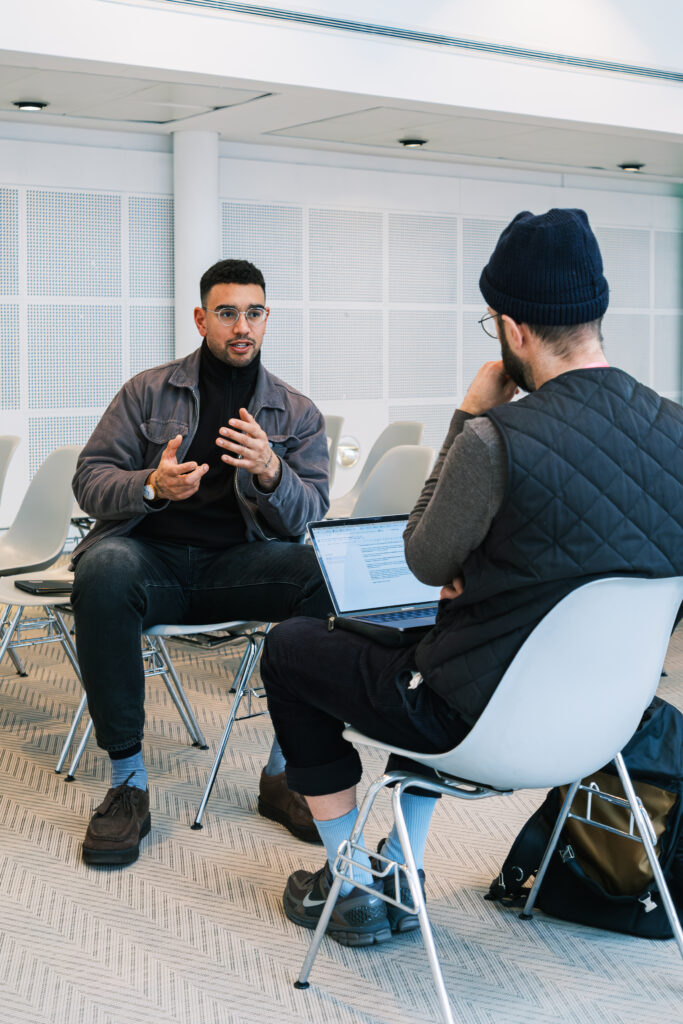
On the sidelines of our visit, Cornelius Puschke spoke with Ciaron Wilkinson, who, as Head of Partnership and Engagement, oversees a key area of the museum.
Cornelius Puschke (CP): Please could you describe what the Manchester Museum is like as an institution in your own words?
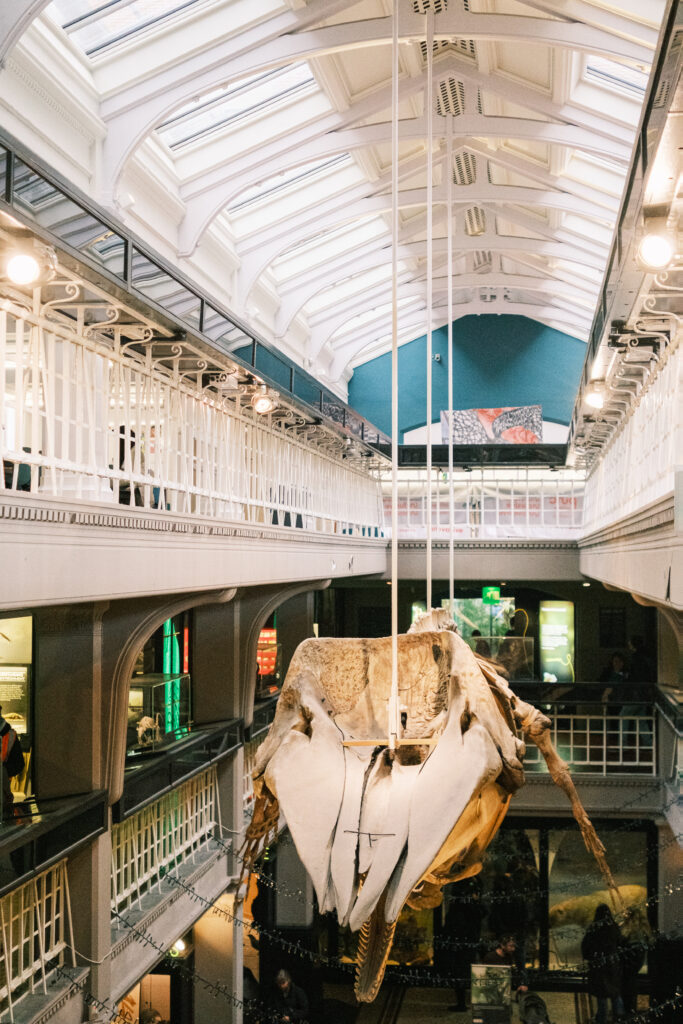
Ciaron Wilkinson (CW): Manchester Museum is an organisation committed to building understanding between cultures and reframing what a museum can be in the 21st century. We are a place that looks after objects and we care for 4 million objects in this building. But more than that, we take a wider view on what care means. For us caring for an object doesn’t just mean looking after the physical object itself, it also means looking after its story, its past and also any communities or people who might be alive today who are linked to that object. So, a good example of that is our ethnographic collection, we call that our living cultures collection because every item within it represents a culture that is alive somewhere today and we are custodians of not only that item but the story and the culture as well.
„We are custodians of not only that item but the story and the culture as well.“
CP: And what’s your role in that?
CW: As head of partnerships and engagement I take a lead on all of the partnerships and relationship building work that we do here. That can be local or national government, with funding bodies or policy makers, it can be other cultural institutions either in the city nationally or internationally or it can be with local communities, people who live around the corner from the museum. I try to provide the framework through which we can engage with those people by setting out the principles of how we want to work with them: openness, honesty, transparency, trying to ensure that we’re not extractive. We don’t want to be a museum that takes things from people but one that builds relationships equitably.
CP: Inclusion, imagination and care are the core values of Manchester Museum. How do you implement them concretely into your everyday practice, e.g. in organisational decision-making?
CW: We believe in using those values to make decisions. For example, when we send out emails internally or externally, when we produce flyers, when we write information about events or texts or exhibition, we ask ourselves: Are we doing that in a way that’s caring? Are we using language that is inclusive? Similarly, when we receive requests from external organisations to work with us, it’s a really good way of making decisions around partnerships. For example we might get an organisation coming to us saying, we want to deliver an event aimed at a certain community, but the person who’s running that event isn’t representative of that community and there might not be anybody else involved who is. In that case we may decide that’s not quite the right fit for us.
„There’s a very popular phrase in the UK which comes from disability rights, which is: Nothing about us without us. And that ethos sits right across the museum.“
Our way of working has also concretely impacted the physical building. Our values guided us in the idea of working in an inclusive way. I have two good examples: One is our picnic area. Our museum has a microwave, cutlery, it’s beautifully designed. Our picnic area is really bright and that’s because we believe that people deserve to come here. We want to send a message with this saying, if you want to come to Manchester Museum and not spend a single penny, not spend a pound: You can and we want you to do that! The second example is our changing places toilet. It’s the most accessible type of toilet you can get. People with disabilities who require a hoist or a winch in order to go to the toilet can come here as well. It was co-designed with a local charity organisation that works with an amazing young disabled man called Joe. There’s a very popular phrase in the UK which comes from disability rights, which is: Nothing about us without us. And that ethos sits right across the museum.
CP: I guess these values give you a feeling of a flow of decision-making rather than having to make a big step into an unknown direction.
CW: Absolutely, and 99% of the people who reach out to the museum see our work and share our values. But it’s not always been like that. It takes a while to get there. But now I can say that people are naturally attracted to you when you’re clear and consistent in practicing these values.
CP: It’s like a magnetic field.
CW: Magnetic is exactly right, yes.
CP: You are now describing the present. But this organisation and its building are quite old, 130 years. There’s a history, there’s a tradition. And this often means exclusion, at least in the tradition of European or Western organisations. Now you are on the way to make the Manchester Museum inclusive. I’m sure there were a few conflicts and challenges over the past years. Would you tell me a little bit more about that and how you dealt with such conflicts?
CW: One of the key questions is how does a museum in 2026 stay relevant? That’s very challenging. The journey we’ve been on to become more inclusive, to open the doors and to make people feel like a place that they belong is because we want to know what is needed in Manchester. We’re trying to respond to what Manchester needs now, and that has been the driving principle for the changes that we’ve made. Manchester is a hugely diverse city with over 200 languages. One of the most diverse cities in the world and also the birthplace of so much change. So many things have started here, gone off and influenced the world. So when conflicts occur, we ask ourselves, do we want to keep doing it the way that we’ve always been doing it, but we know that will be challenging. The consequences of not doing something are often much worse than doing something.
„If you follow the same process, you’ll get the same result.“
CP: More complicated, more conflictuous.
CW: Exactly. You only have to look at the museum and heritage sector in the UK and Europe: It is really struggling to stay relevant. In an era of TikTok and Netflix, museums, galleries and heritage sites are competing against more choice than they ever have been. The reason why this museum has been so successful is because it’s not afraid to try something different. If you follow the same process, you’ll get the same result. The people who work here, are not afraid to just try something. If it doesn’t work, fine. If it does work, great. Or if it works a little bit, then maybe we’ve learned something. Often, there’s so much fear around that.
CP: It’s good that you mention emotions such as fear and braveness, and that you consider their relevance to organisational practice. But how do you actually create an atmosphere of trust, also internally? If you want to focus on highly complex or conflictuous topics externally, it’s very important for a cultural organisation to have security and trust internally.
CW: Having everybody involved is really important. When we curate an exhibition, we have somebody from every single team involved. And it’s the same the way in how we work with communities. There’s often a perception of engagement, outreach and community work but it’s used like an add-on. It’s put at the end to tick a box or to make something look like it’s been „co-curated“. Being able and willing to embed everybody at the beginning is really important for us.
On the internal working, it’s really about celebrating wins and highlighting why a change process has worked. For internal working relationships the size of this organisation plays a significant role. We’ve got about 100 people working here and that is a great number, because I can know 100 people. There’s not a single person who works here whose name I don’t know or who I’ve not had a conversation with.
„What we are doing is to bring people together to better understand each other.“
CP: It sounds like a very self-determined way of working that you are able to do here. You can set out the core values, implement them into your internal work and decision-making. But how do you deal with external forces that question such self-determination? People who say, “I don’t want you to do this or that.” Telling you what you’re allowed or not allowed to do and trying to influence and destabilise you as an organisation. Does that happen and how do you deal with that?
CW: Being really clear about what we stand for is incredibly important and ensuring we have that across the board. We get emails from people who say they don’t agree with our decolonising work or parts of our public programme, they will ask why are you not putting more focus on certain cultures or faiths etc. That happens all the time. I will always have a conversation with these people to say, look, there are lots of places where your values are celebrated. And I’m not taking anything away from that. But what we are doing is to bring people together to better understand each other. The other thing is having data to back that up. We survey. We engage with our communities and our visitors all the time. We ask them things about how they feel when they’re in the building and what they want to see more of, what they want to see less of. We know overwhelmingly many people want a place where they feel safe, where they can better understand the world and things that are happening. They want more of it because those spaces are diminishing. Libraries are closing down, community centres are struggling, youth centres are struggling, food banks are opening up.
So to provide a space where people can come together to learn about each other and learn about something different, those spaces are really rare. Having that conviction about what is needed now enables us to stick to our guns and we believe the results speak for themselves, we’ve had almost 2.5 million visitors since we reopened three years ago.
CP: And this also leads to success. We didn’t talk about the fact that Manchester Museum became European Museum of the Year 2025. So it’s not only something that unfolds locally, but it is also recognised on an European scale.
CW: That was amazing for us and it did feel like an affirmation of everything that we’ve done and all the decisions that we’ve made.
CP: I wish you all the best for the future. Thank you very much, Ciaron.
Hard Facts
Manchester Museum
Year founded:
Originally opened in 1835 as the Manchester Natural History Society. Opened in its current form and in its current buildings as Manchester Museum in 1890.
Mission / Vision:
Our mission is to build understanding between cultures and a more sustainable world, and we are driven by our values to be inclusive, imaginative and caring.
A commitment to inclusion means greater collaboration and co-production, and foregrounding diverse perspectives, so that we are relevant to the communities we serve.
A commitment to imagination means engaging with big ideas, bringing people together to tell stories and explore important questions and research.
A commitment to care means caring for people, their ideas and relationships, as well as objects, so that we might build understanding, empathy and love for our world and each other.
Number of employees:
105
Legal Form:
As a university museum, Manchester Museum is a cultural institution of The University of Manchester, and shares the University’s legal status.
Number of events per year:
Approx 220 events over 2025
Number of visitors per year:
648,595 in 2025
Type of events:
We host everything from musical performances, literature events and panel discussions to creative events focused on families. We also host a series of cultural celebration events, including Lunar New Year, Africa Day, Diwali and more, under our Manchester Museum Celebrates banner.
Website and social media links:
museum.manchester.ac.uk
Instagram: https://www.instagram.com/mcrmuseum/
Facebook: https://www.facebook.com/ManchesterMuseum
LinkedIn: https://www.linkedin.com/company/mcrmuseum
TikTok: https://www.tiktok.com/@manchestermuseum